
3 Questions with Pranav Patwardhan, MBBS, MD
By - November 18, 2026
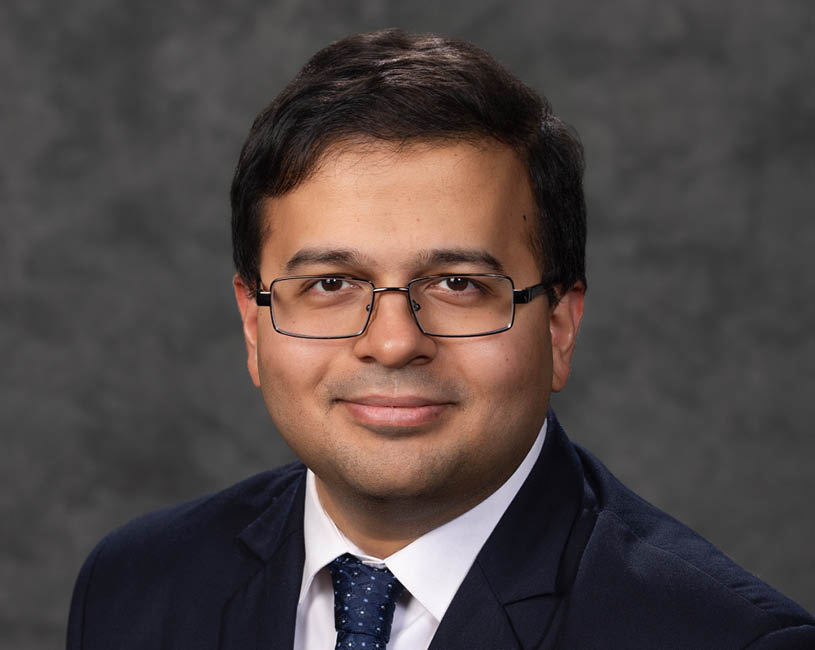
Pranav Patwardhan, MBBS, MD, serves as an assistant professor in the University of Pittsburgh Medical Center (UPMC) Health System at UPMC Altoona. After completing his AP/CP residency and fellowships in hematopathology and molecular genetic pathology at UPMC, Dr. Patwardhan continued his career there. He is board certified in anatomic and clinical pathology, hematopathology and molecular genetic pathology, and continues to pursue his research in hematopathology and molecular genetic pathology in addition to delivering quality pathology services to the local community. “I would like our patients to know that pathology and laboratory medicine is at the very center of the current practice of evidence based medicine, and there are many people working behind the scenes to ensure that our patients get high quality laboratory reports to help diagnose, treat, or prognosticate,” shares Dr. Patwardhan.
Here, Dr. Patwardhan, an ASCP 2026 40 Under Forty honoree, talks with Critical Values sharing how collaborative learning, mentorship, and supportive professional relationships have helped grow his career and his positive impact on patient care.
What inspired you to pursue a career in pathology? Did you have any mentors or role models?
As I was exposed to various specialties during my medical school years, I gradually realized that pathology was the field "where the buck stopped" at all the stages of patient care. As I also learnt more about cancer diagnosis and new diagnostic and therapeutic options on the horizon, along with the Human Genome Project, I realized that the field of pathology would have immense opportunity to contribute to patient care and the advancement of medical science. This led me to choose pathology as a subject to specialize in after medical school.
My career has been influenced by numerous mentors. I am very grateful for the mentorship of Dr. Vinay Kumar, an eminent pathologist and senior author of Robbins Pathologic Basis of Disease, has guided me in this field and also encouraged me to continue my work and maintain my passion for medical education. Interacting with him has by itself been such a remarkable learning experience. Numerous mentors from UPMC, including our incredible program director, Dr. DeFrances, and all the faculty in the Divisions of Hematopathology and Molecular Genetic Pathology have been great mentors who have supported, guided and mentored me and introduced me to numerous opportunities to grow in academic medicine.
How did you first get involved with ASCP? How has your involvement impacted your career?
I remember first getting involved with ASCP in 2020, as soon as I joined UPMC as a first year resident. My very first scientific conference in the US was ASCP 2021 in Boston, where I presented a poster. The conference was a great learning experience and fun too, and helped me meet new friends and mentors with whom I have since been in touch. ASCP Residency Q-banks and other resources, like the Lab Management University and CheckPath (for hematopathology) have been great resources that I have used during my residency and fellowships.
What does collaboration with physicians and other healthcare providers mean to you in ensuring the best care for patients?
Collaborations, whether for clinical care or for research are so rewarding and necessary. With the increasing complexity of all medical specialties, such collaborations help us to better understand the patient's condition, better understand the clinical question and also help us learn about what matters and how it changes the treatment offered to the patients. I think such a communication channel also help us better communicate the nuances, limitations and set reasonable expectations of what information we might be able to provide, after looking at the slides. Medicine in today's era cannot be practiced in a vacuum. It truly is a team effort.
Pathology is becoming increasingly complex. The size of the tissue (for e.g biopsy) is reducing and the expectation of the amount of information we can provide (e.g., histology, IHC, molecular sequencing) is increasing. I think it is very important to remember every morning that all that we do is for our patients, to help them get the most accurate diagnosis to be treated. As such, we should never hesitate to seek opinions from our colleagues, we should never hesitate to pick up the phone and call the clinician for any additional information we would like and we should always pause, reflect and think when we have a gut feeling that something is not right while evaluating a case. Every learning opportunity should be utilized to hone our skills and every hour and day of practicing pathology should be an opportunity to instill and nurture meticulousness, conscientiousness and diagnostic accuracy in our toolkit. Remember, the most important principle is "Do no harm".
As I have learnt more and more and have spent years training in Pathology, what has quite surprised me is the level of sophistication of some of the tests that we perform. Advances in molecular pathology, where we can sequence nanograms of DNA or detect the tumor cell of origin by studying methylation patterns are nothing short of miracles. I have also been amazed by the quality processes and various aspects of laboratory administration and management. I have learnt that delivering quality patient care through our labs really demands top notch team effort and efficient lab management. No one person can achieve anything that we do in the lab today, which also necessitates us to give importance to right behaviors and right emotional intelligence and nurture it in our teams.

Team Critical Values
Team Critical Values